
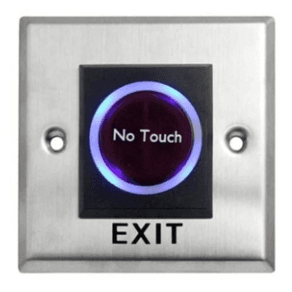
Wireless Exit Button
WS3X3Touchless request-to-exit (RTE) switch or motion sensor exit switch, used in access control systems to allow individuals to exit a secured area without physically touching a switch or button.

Touchless request-to-exit (RTE) switch or motion sensor exit switch, used in access control systems to allow individuals to exit a secured area without physically touching a switch or button.
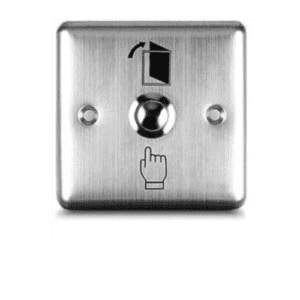
Our specially designed push button for doors, gates, or anywhere there is an access control system. Wide range of options including push button size and color.
This request to exit (REx) device allows you to open a locked door to exit without needing credentials.
Fingerprint readers and RF cards for integrated access control deployments.
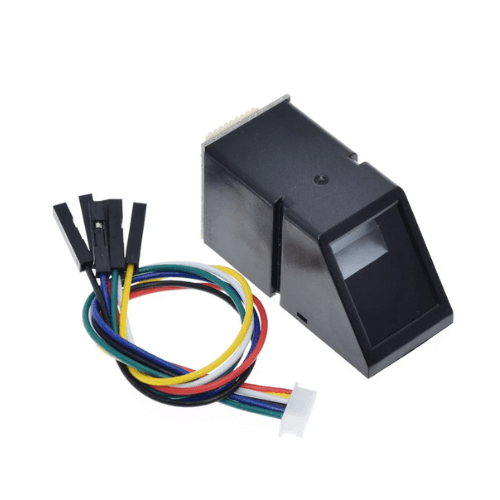
Fingerprint Sensor
Fingerprint sensors integrate with your system to enhance security and provide a convenient, reliable method for allowing or denying entry to secure areas. Access control with fingerprint sensors is widely used in offices, government facilities, healthcare facilities, data centers, and more.
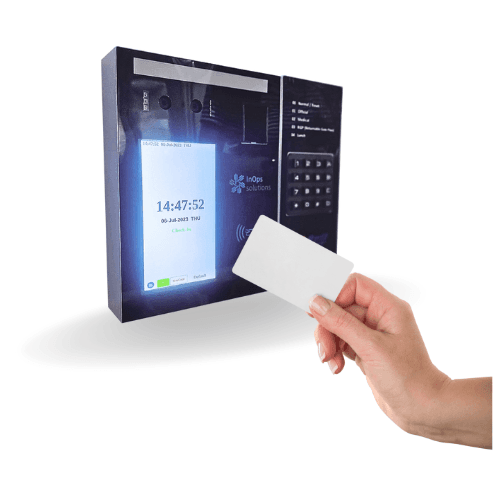
Proximity & MIFARE
This card supports ISO Format proximity technology at both 125KHz and 13.56MHz frequencies. It is lightweight at 9 grams and can be printed on both sides. Common applications include access control, time and attendance, employee ID cards, ticketing, visitor management, and more.
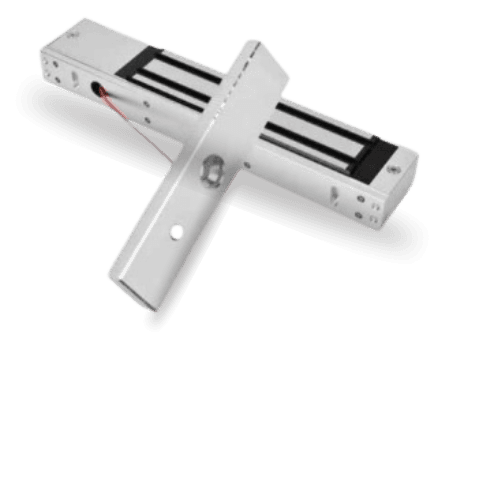
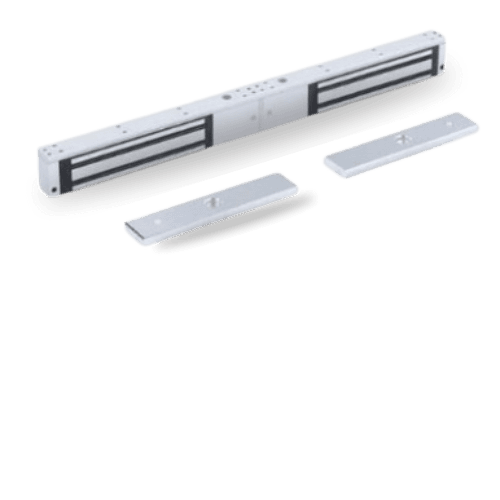
High holding force maglocks for single and double leaf openings.
Used alongside
Common questions about exit buttons, electromagnetic locks, RF cards, and fingerprint sensors.
Beyond the reader itself: a locking device (electromagnetic lock or electric strike), a request-to-exit device so people can leave without a credential, a power supply, and credentials such as RF cards. Which combination you need depends on the door type and the fire-safety requirement for that opening.
An RTE device releases the lock from the secure side so a person can exit without presenting a credential. It matters for safety as much as convenience — most fire and building codes require free egress from a secured area, and a maglock with no exit release can trap people inside.
A push button is pressed physically; a touchless switch uses motion detection to release the lock when a hand approaches. Touchless units are used in cleanrooms, hospitals and food-processing areas where surface contact is restricted, and in high-traffic doors where mechanical buttons wear out.
600 lbs suits most standard interior and glass doors. Higher-traffic or external doors, and doors that see forced-entry risk, need proportionally more. Double-leaf openings need a maglock per leaf — our DL-600 delivers 600 lbs on each.
Yes, with the correct mounting bracket — glass doors need a U-bracket or L-bracket assembly rather than direct fixing. The same lock works across wooden, glass, metal and fire-rated doors provided the mounting hardware matches.
Electromagnetic locks are fail-safe by design: they release when power is cut, so a power failure or fire-alarm trigger frees the door for egress. This is why maglocks are common on escape routes, and why the power supply and alarm interface matter as much as the lock itself.
Cards supporting ISO-format proximity at 125 kHz and 13.56 MHz, covering common proximity and MIFARE deployments. Cards are printable on both sides for use as employee ID, so one credential serves access, attendance, canteen and visitor identification.
Yes, where all sites run on the same access control platform. A card issued at one plant is recognised at any reader connected to the same system — useful for staff and contractors who move between locations. Where sites run on different legacy controllers, multi-site card use depends on whether the card format and frequency are shared; we check this during the survey. For organisations running face recognition attendance across sites, biometric identity removes the card dependency entirely — one enrolled face works at every gate with no card to lose or forget.
Usually yes, if the existing cards run on 125 kHz or 13.56 MHz standards. Re-issuing credentials to a large workforce is expensive and disruptive, so we check card compatibility during the site survey before recommending readers.
Sensors integrate into an access control system rather than operating alone — the sensor captures, the controller decides, the lock or lane responds. For sites wanting a self-contained unit, a biometric terminal combines all three.
Yes. Exit buttons, maglocks and card readers are commonly retrofitted to doors already under access control, and to lanes where the original installation covered entry but not egress or secondary doors. Compatibility depends on the existing controller and voltage.
Both. Accessories are supplied standalone for sites completing or extending an existing installation, and as part of a full deployment alongside biometric devices and turnstiles.
Yes — exit devices, locks and readers are covered alongside biometric terminals and turnstiles under biometric AMC, which matters because maglocks and exit buttons are among the highest-wear components in an access installation.