
Touchless
Face Recognition Terminals
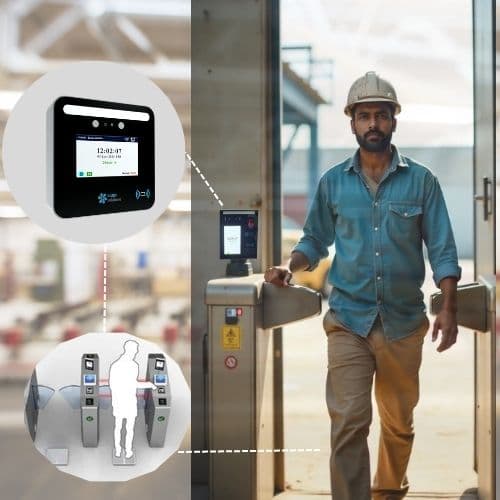
Contactless recognition in under a second. Built for throughput at shift change, with outdoor-rated options for plant gates — the right default for most Indian factory environments.
Face terminals, fingerprint readers, RFID and turnstiles from ZKTeco, eSSL and Realtime — supplied, installed and maintained across India. One attendance engine, every site. 3,000+ devices, 70+ sites since 2014.
A biometric device identifies a person by a physical characteristic — face, fingerprint or iris — instead of a card, PIN or signature. In attendance and access control that matters for one reason: a card can be handed to a colleague and a PIN can be shared, but a face cannot. Every punch is tied to a verified individual, which is what turns attendance from a count into a record.
Industrial deployments use four device classes: face recognition terminals, fingerprint readers, RFID and card readers, and turnstiles that physically enforce the decision. Self-service kiosks extend the same identity to worker-facing functions like payslips, leave and attendance queries.
Face recognition
< 1 sec
per identity check
User capacity
50,000+
faces per terminal
Punch storage
200,000
logs offline per device
Auth modes
Face / FP / Card / PIN
in one estate
Four product groups, each integrating with the same InOps attendance engine — so a single enrolment covers every gate, canteen counter and site.
Contactless recognition in under a second. Built for throughput at shift change, with outdoor-rated options for plant gates — the right default for most Indian factory environments.
The established workhorse of Indian attendance. Lower cost per point, well suited to offices, admin blocks and lower-throughput indoor entries.
For sites already standardised on cards, or as a second factor alongside biometrics. Integrates with existing card estates rather than replacing them.
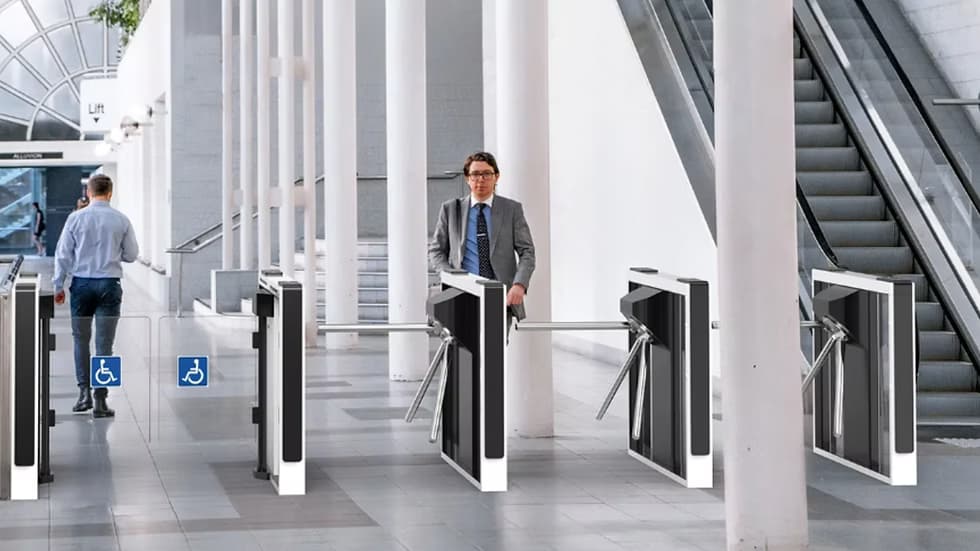
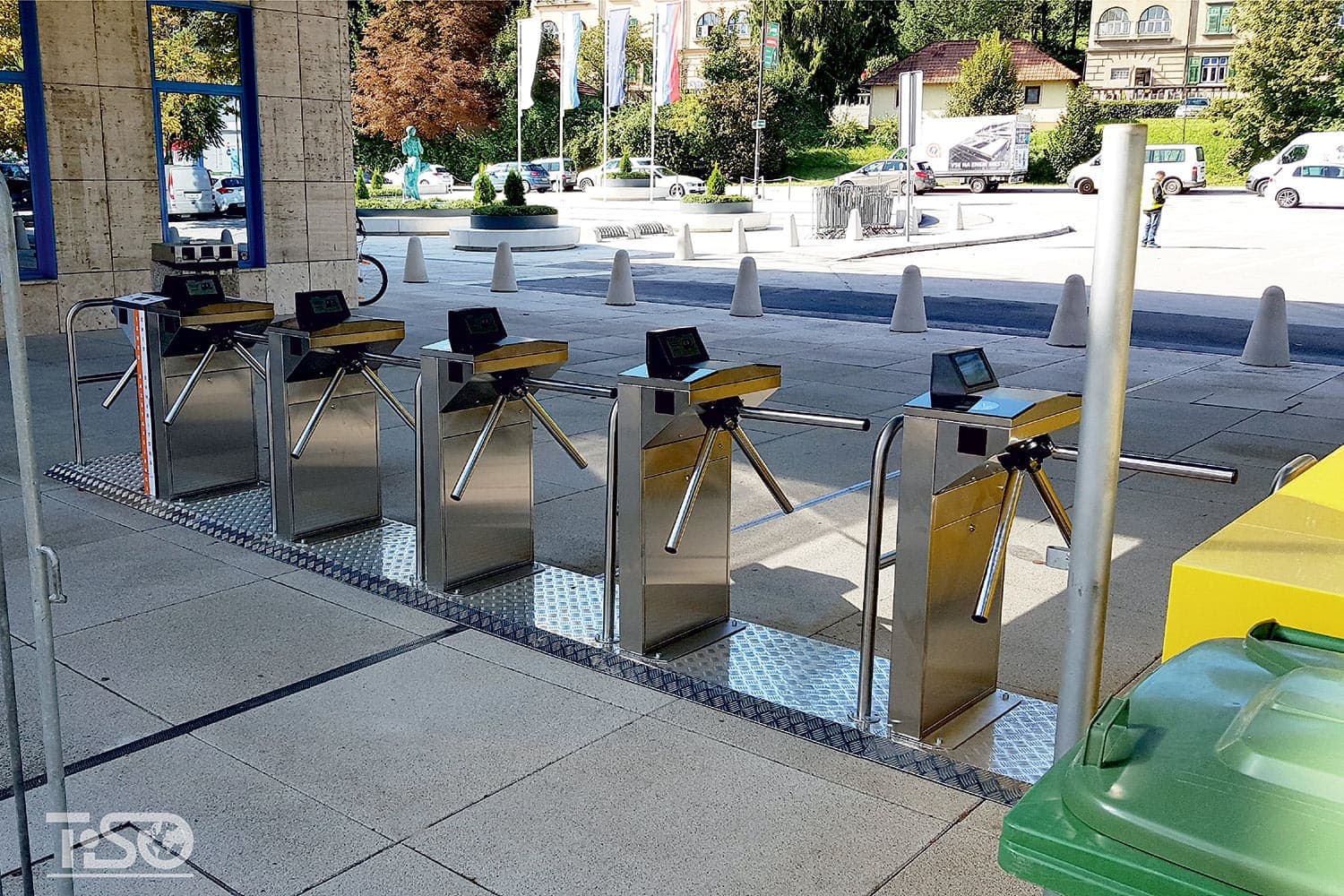
Physical enforcement at the gate, with any reader type mounted to the lane. Tripod, flap and full-height options.
Enrolment, attendance regularisation, payslip access and leave requests — for workforces without company laptops.
Preventive maintenance, remote health monitoring, firmware management and on-site engineers. Spares held in India.
Most Indian factories buy fingerprint readers by default and then fight attendance disputes for years, because manual and shop-floor work damages fingerprints. Face recognition costs more per device and less per year.
| Situation | Recommended | Why |
|---|---|---|
| High-throughput plant gate, shift change crowding | Face terminal or CCTV capture | No queue, no contact, 25–30/min per lane |
| Dusty, oily or wet environment | Face terminal | Fingerprints fail on damaged or contaminated fingers — the single most common cause of attendance disputes in manufacturing |
| Indoor office or admin block | Fingerprint reader | Lower cost per point, adequate throughput |
| Perimeter or high-security gate | Full-height turnstile + face terminal | Physical enforcement, no tailgating |
| Distributed or moving worksites | Mobile app with face + GPS | No fixed hardware → mobile attendance |
| Existing camera coverage | CCTV-based capture | Reuses installed cameras → CCTV attendance |
High-throughput gates handle 25–30 workers/min per lane — no queuing at shift change.
IP65-rated, dust and humidity resistant — built for factory floors and outdoor plant entrances.
Face, fingerprint, RFID and PIN in one estate — fallback modes for every gate scenario.
Liveness detection prevents photo and 3D mask attacks — standard on face terminals.
Stores punches locally, syncs on reconnect — no data loss at remote or low-connectivity sites.
TCP/IP, WiFi, Wiegand and RS485 — integrates with any existing access control infrastructure.
Specifications
Advanced capabilities
We maintain and integrate devices regardless of who supplied them — mixed estates are the norm.
Face and fingerprint terminals, turnstiles, controllers. Our primary supply partnership.
View ZKTeco devices →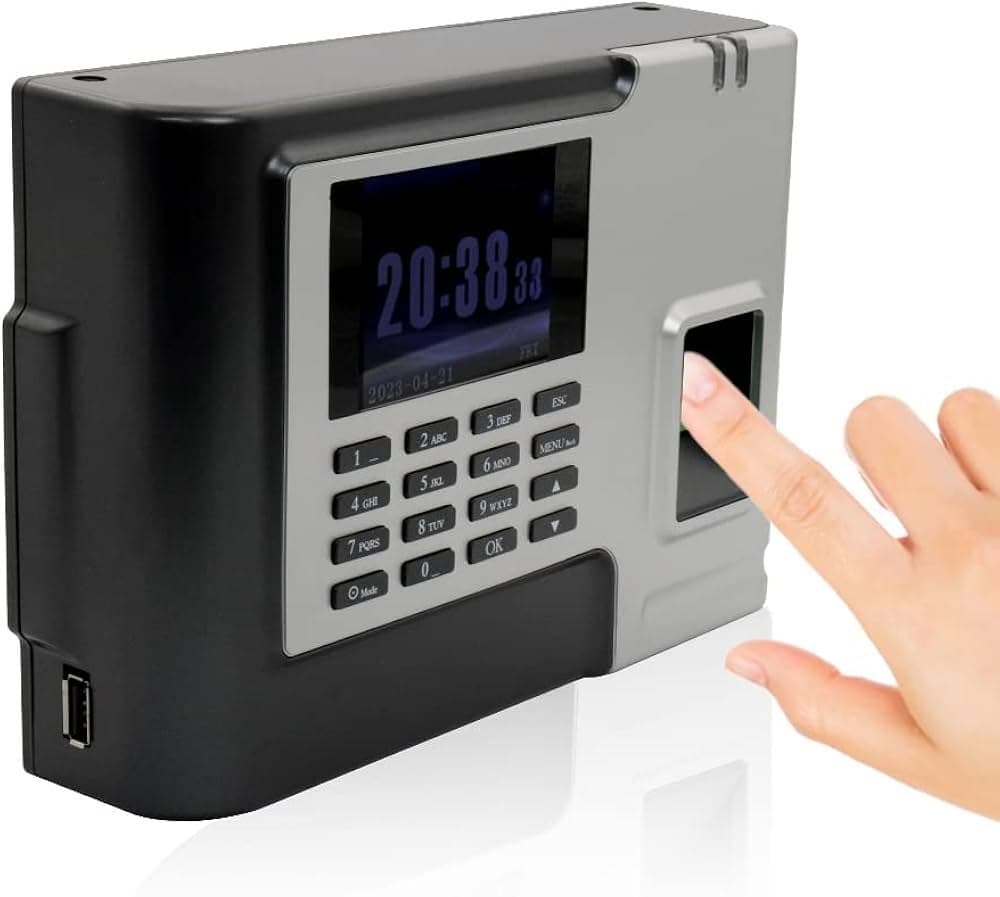
Widely deployed across Indian industry; we supply, integrate and maintain.
Common in existing plant estates; supported under takeover AMC.
We maintain and integrate devices regardless of who supplied them.
A device that recognises a worker but doesn't feed anything is a turnstile with a screen. Every InOps device writes to one attendance and identity engine, so a single enrolment covers every gate, canteen counter and site — and the resulting data feeds labour management system software, payroll, and statutory registers.
That connection is why our device sales sit alongside software and services rather than as a standalone hardware line.
Real-time attendance sync
Punches flow instantly to CLMS — no manual entry, no end-of-day batch.
Labour management integration
Contractor billing reconciled against biometric gate records before payment.
Single identity, every site
One enrolment activates the worker across every gate, canteen and plant.
Data fabric
Site survey → device selection per gate → installation and commissioning → enrolment → integration with attendance and payroll. After deployment, devices are covered under biometric AMC — preventive maintenance, remote health monitoring, firmware management and on-site engineers, with spares held in India.
For estates in unknown condition — the usual situation after a few years of ad-hoc purchasing — a biometric database audit establishes what is actually deployed and working before anything is contracted.
Device selection matched to gate conditions, throughput and environment — not to what's in stock.
Civil coordination, mounting, networking, enrolment, and post-install verification across every gate.
Devices connected to InOps attendance, payroll and compliance — punches become statutory records automatically.
Preventive maintenance, remote health monitoring, firmware management and on-site engineers. Spares held in India.
From climate-controlled offices to dusty factory floors — our hardware and AMC cover the full range.
Common questions about biometric attendance machines, device selection, brand options, integration and maintenance.
A biometric device identifies a person by a physical characteristic — most commonly face or fingerprint — rather than by a card or PIN. For attendance it captures that identity at entry and exit and records the timestamp, so working hours are tied to a verified person rather than a transferable credential. The device sends each event to attendance software, where it becomes a shift record and eventually a payroll input.
Face recognition, in most industrial settings. Fingerprint readers fail on dry, damaged, oily or dirty fingers, which describes the hands of most manual workers by mid-shift. Every failed punch becomes a manual entry, and every manual entry becomes a payroll dispute. Fingerprint devices remain sensible for offices and low-throughput indoor points where hands are clean and volumes are modest.
Cost depends on modality, throughput, environment rating and volume. Fingerprint readers sit at the entry level, face terminals cost more per unit, and turnstile-integrated installations carry civil and installation costs alongside the device. We quote against a site survey rather than a price list, because the same headcount at two different gates often needs different hardware.
ZKTeco, eSSL and Realtime, plus turnstiles, flap barriers and access controllers. We also maintain and integrate mixed-brand estates originally supplied by others, which is the normal situation at plants that have bought hardware over several years.
Yes. Devices feed the InOps attendance engine, and verified data can be exported to existing HR and payroll systems. Where a plant already runs an HRMS, the devices become the capture layer rather than a parallel system.
Determined by peak throughput, not headcount. A gate handling 800 workers within a 20-minute shift change needs several lanes or camera-based capture; the same 800 arriving across two hours may need one device. The site survey sizes this, and getting it wrong is the most common cause of queue complaints after deployment.
Yes. Devices store punches locally and sync when the connection returns, which matters at remote plants, project sites and locations with unreliable links.
Multi-lane gates continue on the remaining readers. Single-reader gates are the real risk, which is why identifying single points of failure is part of both deployment planning and AMC onboarding. Sites running mobile or camera-based capture can also fall back to those methods while a terminal is down.
Yes. A single enrolment activates the worker's identity across every device on site — gate terminals, canteen counters, attendance points — and across plants in a multi-site deployment. Workers moving between sites or contractors are not re-enrolled, which matters most in contract workforces where movement is constant.
Consent is captured digitally at enrolment, in the worker's preferred language, before any biometric template is created. Templates are access-controlled with configurable retention, and handling aligns with DPDP Act obligations. Workers can raise queries through the same channel used for enrolment.
No. Devices store a mathematical template derived from the biometric, not the image itself, and the template cannot be reversed into a usable fingerprint or photograph. This distinction matters when explaining the system to workers and works committees.
Devices are covered under biometric AMC — preventive maintenance, remote monitoring, firmware updates and on-site engineer support across every site under one contract, including devices originally supplied by other vendors.
Yes. Devices are added to the existing estate and inherit the same worker identities and rules. Adding a gate does not mean re-enrolling a workforce, which is one of the practical reasons to standardise the platform even when hardware brands differ.
Registered Device service applies to Aadhaar-based biometric authentication, where UIDAI requires devices to be registered and encrypted at source. It is relevant where Aadhaar authentication is specifically required; standard attendance and access control do not depend on it.